The previous mention of the angry article talked about the Radio Rhizome Project in Los Angeles. I was curious what this was and decided to spend some time looking into it. I am fascinated by what they are doing. I always enjoy the idea of spectrum as a public asset or a regulated part of the 'commons'. What Radio Rhizome is doing is dancing on the edges of broadcast law and using the power of the Internet to create a radio station that strictly speaking is a collection of broadcast nodes with synchronized programming.
Any of us can get an AM transmitter and can broadcast a limited signal on a chunk of spectrum, provided the range is limited and provided that nobody else is licensed to broadcast at that frequency. Essentially I can broadcast from a small base to my neighborhood from a very low power station. But what happens when a bunch of people are connected to the Internet, and have transmitters and are all simultaneously broadcasting the same feed provided by one source? Well you all of a sudden have taken back a part of the airwaves and formed your own public access / community radio.
I think this is an interesting concept, which probably has a lot of the same challenges as public access /free wifi. Can you get enough consistent coverage to actually create a consistent signal that is worth hearing? Maybe in dense areas like New York. I am thinking San Diego, probably not.
It will be interesting to see how citizens view spectrum over time. I find it interesting that so much has been allocated to corporations in a variety of frequencies that can't be used by us, but that isn't being utilized by commercial ventures either. Kind of an application of the commons for a purpose without any real good coming back to the community. Sort of like domain name squatting.....
Anyways, this from a physical perspective, and Bit Torrent and podcasting are all fascinating and innovative takes on non - center of the network distribution that have interesting possibilities.
Wednesday, October 06, 2004


User Generated Content:Roll Your Own Network
Yesterday was a big day for user generated content / edge of the network content in the blogosphere. This article 'f*ck big media' was picked up on slashdot and Wired put out this piece.
These are both good posts, although the first has a bit of a hard edge. I like characterizing the battle in content as the battle between the content luddites who got caught off guard by the technological revolution in distribution versus the P2P 'jihadis' who are every bit as dogmatic as the former. We need some middle ground, we need some product.
These are both good posts, although the first has a bit of a hard edge. I like characterizing the battle in content as the battle between the content luddites who got caught off guard by the technological revolution in distribution versus the P2P 'jihadis' who are every bit as dogmatic as the former. We need some middle ground, we need some product.
Tuesday, October 05, 2004
Capitalism - SpaceShipOne
It's amazing what the profit motive can accomplish when all other things fail. Although NASA has a rich and proud history, it's amazing what one can accomplish when $10 million dollars (and the obvious future benefits resulting from success) is the prize.
Our politicians lack the vision to galvanize the country's resources around solving serious challenges we face (Environment, Energy etc.) Looks like we need a few more capitalists to get the ball rolling.
Our politicians lack the vision to galvanize the country's resources around solving serious challenges we face (Environment, Energy etc.) Looks like we need a few more capitalists to get the ball rolling.
User Generated Content: Low Def TV
One of my projects between Vivendi and Intercasting was a show idea that I worked on with a couple of friends called Low Def TV. A friend sent me a link yesterday to a site called ManiaTV which is a web equivalent of what we were shooting for with Low Def, well sort of.
In February of 2002 we launched MP4.com at Vivendi. The idea was to basically do the MP3.com thing for internet generated video content. The tools for producing really cool and high quality content were widespread with Flash and DV Cam filmmaking and we wanted to showcase this. The site was given zero resources and our GM Natasha Rabe was told to fight to make it work. The site got some really cool traction but ultimately got killed in the divestment of the various Internet assets.
Joe Fleischer (Big Champagne, Crush Management) and I spent a bunch of time talking about how TV evolves, etc. Joe was explaining how TV shows and movies were being trading on Peer to Peer networks at an amazing rate. I shared with him my concept of content coming from the edge of the network as being the most interesting trend in media to me. So we started thinking about Opensource TV and eventually came up with Low Def TV.
We got a hold of David Todd, the content acquisition guy from MP4.com, and started soliciting a bunch of content from the best of MP4. We spent a couple of months getting together an edit and eventually shot and edited a 22 minute pilot. I love the show, but it was really naughty, kind of a variety show for the Jackass crowd. We sent it out to limited parties and seemed to be getting some interest until some woman named Jackson flashed a nipple during the Superbowl.
At any rate we have started sending it out again for reaction, and if you want a peek at the DVD drop me an email.
There are a multitude of talented and bright people doing a variety of things with edge created content using a variety of distribution mechanisms. I haven't spent much time with them yet, but my take is as follows:
1. Centralized hosting of video content costs too much.
2. P2P hosting of content has the challenge of either 1. closed networks, or 2. service level challenges, or 3. possible legal issues (STOP INDUCE)
3. People don't watch TV on computers. Yet. The work with companies like Akimbo and others holds some promise.
For now, I think the best one can do is aggregate content from the edge of the network into show formats (Indie, art, comedy, etc.) and pitch these as the next step in Reality TV. For now.
In February of 2002 we launched MP4.com at Vivendi. The idea was to basically do the MP3.com thing for internet generated video content. The tools for producing really cool and high quality content were widespread with Flash and DV Cam filmmaking and we wanted to showcase this. The site was given zero resources and our GM Natasha Rabe was told to fight to make it work. The site got some really cool traction but ultimately got killed in the divestment of the various Internet assets.
Joe Fleischer (Big Champagne, Crush Management) and I spent a bunch of time talking about how TV evolves, etc. Joe was explaining how TV shows and movies were being trading on Peer to Peer networks at an amazing rate. I shared with him my concept of content coming from the edge of the network as being the most interesting trend in media to me. So we started thinking about Opensource TV and eventually came up with Low Def TV.
We got a hold of David Todd, the content acquisition guy from MP4.com, and started soliciting a bunch of content from the best of MP4. We spent a couple of months getting together an edit and eventually shot and edited a 22 minute pilot. I love the show, but it was really naughty, kind of a variety show for the Jackass crowd. We sent it out to limited parties and seemed to be getting some interest until some woman named Jackson flashed a nipple during the Superbowl.
At any rate we have started sending it out again for reaction, and if you want a peek at the DVD drop me an email.
There are a multitude of talented and bright people doing a variety of things with edge created content using a variety of distribution mechanisms. I haven't spent much time with them yet, but my take is as follows:
1. Centralized hosting of video content costs too much.
2. P2P hosting of content has the challenge of either 1. closed networks, or 2. service level challenges, or 3. possible legal issues (STOP INDUCE)
3. People don't watch TV on computers. Yet. The work with companies like Akimbo and others holds some promise.
For now, I think the best one can do is aggregate content from the edge of the network into show formats (Indie, art, comedy, etc.) and pitch these as the next step in Reality TV. For now.
Monday, October 04, 2004
Channel Derrick
What's going on in my channel you might wonder?
Music:
Franz Ferdinand - Franz Ferdinand: Cool CD, reminded me of the Strokes on the first listen. I need to spend more time with it, but it will be in my playlist for a while.
Green Day - American Idiot: Still too early for me to know what I think about this CD, but so far so good. I heard that this is their masterpiece. It didn't hit me right away, but time will tell.
Brand New - Deja Entendu: I am really enjoying this CD. Courtesy of my eMusic account. (More on the new eMusic look and site in another post). I obviously got into this late as it was released in 2003, but its really fun for me to hear bands develop and although their first didn't do much for me this is refreshing and this band could have a lot of promise in the future.
Books:
We The Media - Dan Gilmour: I can't add anything to the numerous posts online. As a disciple of user generated content, this book IS user generated journalism. If you are interested in any of my User Generated Posts in the least, then go out and by this book.
Radio:
Adam Curry - Daily Source Code: Just got turned onto this by the recent podcasting posting flurries. At first listen, I was not getting it. Upon a couple of other listens, I can't wait to hear tomorrows show. Its not for everyone, but I love the man in the wilderness, or in this case the Netherlands doing his show for no one or everyone. The transition from MTV VJay to hacker podcaster is just too much fun for me.
TV:
Lost: Ok so TV makes a funny turn when we go from Drama to Reality TV(Survivor) to Drama representing Reality TV(Lost). I am drawn in for now, but this could go either way.
Videogame:
NCAA 2005: I can't quit this one, although in general, the games are an increasingly infrequent indulgence given how busy things are with the business, pending triplets, etc. I liked this so much that I didn't buy Madden 2005. Lucky for me, it shipped with a bad bug...
Music:
Franz Ferdinand - Franz Ferdinand: Cool CD, reminded me of the Strokes on the first listen. I need to spend more time with it, but it will be in my playlist for a while.
Green Day - American Idiot: Still too early for me to know what I think about this CD, but so far so good. I heard that this is their masterpiece. It didn't hit me right away, but time will tell.
Brand New - Deja Entendu: I am really enjoying this CD. Courtesy of my eMusic account. (More on the new eMusic look and site in another post). I obviously got into this late as it was released in 2003, but its really fun for me to hear bands develop and although their first didn't do much for me this is refreshing and this band could have a lot of promise in the future.
Books:
We The Media - Dan Gilmour: I can't add anything to the numerous posts online. As a disciple of user generated content, this book IS user generated journalism. If you are interested in any of my User Generated Posts in the least, then go out and by this book.
Radio:
Adam Curry - Daily Source Code: Just got turned onto this by the recent podcasting posting flurries. At first listen, I was not getting it. Upon a couple of other listens, I can't wait to hear tomorrows show. Its not for everyone, but I love the man in the wilderness, or in this case the Netherlands doing his show for no one or everyone. The transition from MTV VJay to hacker podcaster is just too much fun for me.
TV:
Lost: Ok so TV makes a funny turn when we go from Drama to Reality TV(Survivor) to Drama representing Reality TV(Lost). I am drawn in for now, but this could go either way.
Videogame:
NCAA 2005: I can't quit this one, although in general, the games are an increasingly infrequent indulgence given how busy things are with the business, pending triplets, etc. I liked this so much that I didn't buy Madden 2005. Lucky for me, it shipped with a bad bug...
Friday, October 01, 2004
Definition of Moblogging - Take 3
This is funny. This is moblogging, or I guess evidence. I guess it really isn't moblogging if you don't post it to someplace for others to read though....
Thursday, September 30, 2004
User Generated Content: User Generated Programming
Early this week I saw the post on the Blogger Con website the post concerning a session on Podcasting. I of course thought to myself that the weirdo Mac people had some new fangled thing that isn’t that interesting to talk about. Mac people are so religious. (You have to take your shots if you are Windows user) By yesterday I had seen a ripple of posts about podcasting and decided to dig out the iPod I bought for my wife for a gift when they first came out. The iPod had been hiding in the bottom of my computer bag waiting for the next cross country trip providing very little value other than making my heavy bag heavier.
Wednesday, September 29, 2004
Domain Name Branding
Russ wrote an article today about the shortage of mobile friendly names. Shawn and I were laughing about this as we have been enjoying the exercise of 'domain name branding'. It has to be short. It has to be cool. It has to work.
Guess what. Those are all taken. ALL OF THEM.
On the brighter side, if you can find one, I can guarantee that the frustration of finding a domain, paying either the $15-30 or $1000s of dollars is a walk in the park compared to the process of having your lawyers clear the Trademark office.
Guess what, if it wasn't taken in the domain name registry chances are that it may be in the PTO!!!!!
We need to start all over with this again. Can every one just give back their domain names and trademarks and start all over again?
Maybe not.
Guess what. Those are all taken. ALL OF THEM.
On the brighter side, if you can find one, I can guarantee that the frustration of finding a domain, paying either the $15-30 or $1000s of dollars is a walk in the park compared to the process of having your lawyers clear the Trademark office.
Guess what, if it wasn't taken in the domain name registry chances are that it may be in the PTO!!!!!
We need to start all over with this again. Can every one just give back their domain names and trademarks and start all over again?
Maybe not.
Tuesday, September 28, 2004
Scoble Overload Quote
I read this article yesterday at Scobleizer mentioning the upcoming session at Blogger Con on Information Overload. It was funny to me to realize in the last 6 months or so, I have adopted RSS and have become way more on top of so many things as a result. The by-product of this is a daily chunk of time that is spent 'staying on top' of the trends du jour. Again, I recommend RSS reading to those who don't do it yet....You will.
So in reading his post I was astounded to see that he reads somewhere north of 900 blogs a day. This got me to thinking, how many do I read? Currently I am reading just over 70. This number is growing, and as he mentioned I clean the list periodically as some go silent or I find that they have too much noise without much sound.
I don't know how this ends up with more and more smart/cool/insightful people embracing blogging, but its my hope that it continues to create a fascinating world of user generated content that stands in stark contrast to what most people have become accustomed to reading/hearing/seeing/playing etc.
So in reading his post I was astounded to see that he reads somewhere north of 900 blogs a day. This got me to thinking, how many do I read? Currently I am reading just over 70. This number is growing, and as he mentioned I clean the list periodically as some go silent or I find that they have too much noise without much sound.
I don't know how this ends up with more and more smart/cool/insightful people embracing blogging, but its my hope that it continues to create a fascinating world of user generated content that stands in stark contrast to what most people have become accustomed to reading/hearing/seeing/playing etc.
User Generated Content: MP3.com data mining
MP3.com was always focused on the collection of data from every point we could collect it. The 800,000 unique visitors generated 4,000,000 page views and 4,000,000 downloads and streams a day. We had an extensive data collection/warehousing/analytics team that could slice it many different ways.
- These bands were generally pre-Soundscan (they didn’t show up on local retail sales figures because they only sold their CDs at shows.)
- They were organized online using a combination of IM, blogs, and street team tools to get the word out.
- A majority of them were playing all ages venues which didn’t normally pop up on the radar of club goers. (Who wants to hang out with 15 year olds ;-) )
- The genres of music were genres that weren’t typically represented by MTV, radio and retail and were clustered around emo/pop punk and grindcore.
- These bands generally played around 50-100 shows a year.
There was a lot of more fascinating data, but once we had this data we decided to take a look a level deeper.
- If you can create a platform to distribute content that has detailed data, you can identify trends in large populations.
- Content that has promise can be then test marketed to groups of people within that network to determine if the interest is specialized or broad.
- Based on whether or not the interest is broad or specialized, one can devise a marketing program to fit the right criteria of benefit / return based on the preliminary findings.
- Although data is an indicator of a potential audience for content, there are intangibles that cannot be captured in the data, i.e. will a band do well on TV, can they maintain creative output or even manage enough output to warrant additional investment.
I think that this sort of path of analysis and experimentation is the place where the development of new lower cost content can and should occur. I am not saying that the traditional method of content development and marketing goes away, but I do think that a more low to the ground approach has a lot of promise for a new economic model that is more sustainable in the long-term.
Monday, September 27, 2004
Baby names
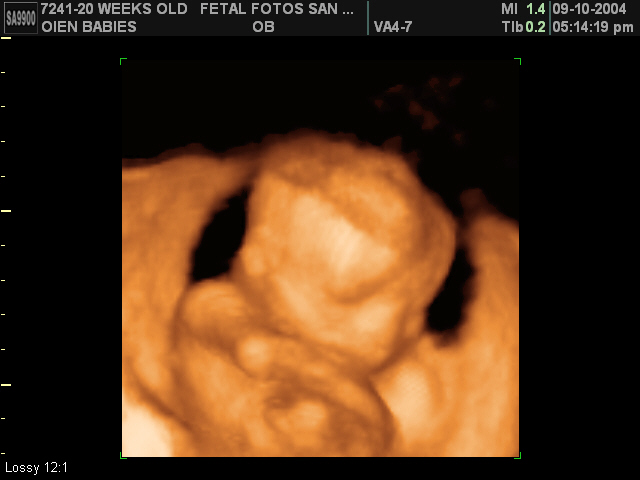
You would think that when you have three kids at once, it would be easy to name them. That has not been the case. Over the last couple of days we have finally settled on the names. The identical twin boys are Brit and Tucker. Our girl will be named Mallory. This is a much better nomenclature than Baby A,B and C.
Friday, September 24, 2004
The Changing Face of Content
David Weinberger writes an interesting blog post about his attendance at an Entertainment and Media session of the World Economic Forum. This sorts of discussions always get me started. My comments below:
The greatest challenge for the content companies IMHO is how the explosion in distribution changes all the economics of their business. What has been a hit driven - venture capital style model has seen the erosion of limited distribution which deteriorates their margins. When the promise of a 'hit' to fund the 'misses' disappears, then the model isn't sustainable. In a world of previously untold distribution capacity, yes content is still king, but the marginal value of the content has to outweigh the cost to produce it. This is fundamental. In this world, content creation becomes less of a large scale enterprise and more of a cottage industry. I recognize that 'big hit' style content will continue to be produced, but the majority of content must become cheaper to make and has so if you consider non-mainstream music, reality based TV. etc.
The interesting thing about this sort of distribution is that it gives you an extremely powerful mechanism to market to a select audience in an extremely cost effective way. It really is a rethinking of the whole business, and requires a different skill set for success, but it is possible and I would argue, the inevitable outcome of what is occurring.
Thursday, September 23, 2004
Definition of Moblogging - Take 2
Funny how life presents things to you. This is moblogging to me. Our offices are in what is called the Golden Triangle Area of San Diego. This area is just east of UCSD and encompasses the area known as University Town Center. It's where we are, where MP3.com used to be, DIVx Networks is here, Linspire, etc.
On my way to work today (late - nanny was sick) traffic was terrible. I didn't know why until I crossed the bridge on Genesee over Interstate 5. This person just missed out on a 40 ft plunge onto the 5 in heavy traffic. I all of a sudden had the presence of mind to grab my cell phone and snap a picture. Of course I would have never written a blog post about this, but in moblogging, its blogging while you live.
Two other important factors. 1. Time is key. This picture will not be as interesting tomorrow. If you are stuck in traffic right now and had an alert, you would be more sympathetic to the reason for the delay. 2. Location is key. If I had the lat and long, you would know to avoid that area like the plague.
On my way to work today (late - nanny was sick) traffic was terrible. I didn't know why until I crossed the bridge on Genesee over Interstate 5. This person just missed out on a 40 ft plunge onto the 5 in heavy traffic. I all of a sudden had the presence of mind to grab my cell phone and snap a picture. Of course I would have never written a blog post about this, but in moblogging, its blogging while you live.
Two other important factors. 1. Time is key. This picture will not be as interesting tomorrow. If you are stuck in traffic right now and had an alert, you would be more sympathetic to the reason for the delay. 2. Location is key. If I had the lat and long, you would know to avoid that area like the plague.
Tuesday, September 21, 2004
Wireless Sensor Networks Part 4
I saw this article today about Dust Technologies. It reminded me that my brother in laws company got some great press last week on....
Grand Forks Herald
Minneapolis Star Tribune
WCCO Minneapolis
They are starting to do some cool early experiments and pilots with sugar beets, potatoes, pasta...
More to come I am sure.
Grand Forks Herald
Minneapolis Star Tribune
WCCO Minneapolis
They are starting to do some cool early experiments and pilots with sugar beets, potatoes, pasta...
More to come I am sure.
Definition of Moblogging
I read with interest yesterday the post by Dave Winer regarding the definition of moblogging.
I agree with the definition put forth and would add to the thought a bit.
My partners Shawn and Tom worked at/ran Moviso. One of the applications that Moviso rolled out before it was sold to Infospace was Match Mobile. They came away from that experience with the realization that porting internet applications to mobile, doesn't really work in the same way that you would expect on the web. It's similar to the TV to Internet transition. Remember Pathfinder? Putting TV on the Internet wasn't a wild success. The best Internet content is generally created on and for the Internet. I would say the same holds true for mobile, or at least it should.
Moblogging takes the normal experience of publishing/creating content and adds a layer of time and place value that doesn't necessarily exist when I am sitting here typing on my laptop. On my photoblog I have pictures I took just for family, or pictures that I took because I didn't have time to type the information I needed into my cell phone. The mobile part in the last example was purely a method of capturing information for me. Sorry if it didn't help you out. In an LBS world that picture would have informed you that the Lat and Long corresponded to Costco in Carlsbad. Now maybe that information would be more relevant to someone other than me. Maybe not.
I think that the time/place overlay is a key different piece in the moblogging equation that will reveal itself more clearly in the not to distant future. To that end, yes moblogging is what we do when we are away from our normal blogging environment, but there is an element of context that definitely flavors that experience. Take for instance my bluetooth keyboard for my phone....
I agree with the definition put forth and would add to the thought a bit.
My partners Shawn and Tom worked at/ran Moviso. One of the applications that Moviso rolled out before it was sold to Infospace was Match Mobile. They came away from that experience with the realization that porting internet applications to mobile, doesn't really work in the same way that you would expect on the web. It's similar to the TV to Internet transition. Remember Pathfinder? Putting TV on the Internet wasn't a wild success. The best Internet content is generally created on and for the Internet. I would say the same holds true for mobile, or at least it should.
Moblogging takes the normal experience of publishing/creating content and adds a layer of time and place value that doesn't necessarily exist when I am sitting here typing on my laptop. On my photoblog I have pictures I took just for family, or pictures that I took because I didn't have time to type the information I needed into my cell phone. The mobile part in the last example was purely a method of capturing information for me. Sorry if it didn't help you out. In an LBS world that picture would have informed you that the Lat and Long corresponded to Costco in Carlsbad. Now maybe that information would be more relevant to someone other than me. Maybe not.
I think that the time/place overlay is a key different piece in the moblogging equation that will reveal itself more clearly in the not to distant future. To that end, yes moblogging is what we do when we are away from our normal blogging environment, but there is an element of context that definitely flavors that experience. Take for instance my bluetooth keyboard for my phone....
Friday, September 17, 2004
User Generated Content: unmediated
Got turned onto my new favorite website, unmediated. Their about section says -
unmediated is a group blog that tracks the tools, processes, and ideas being used to decentralize media production and distribution. I love it.
Wednesday, September 15, 2004


Subscribe to:
Posts (Atom)